
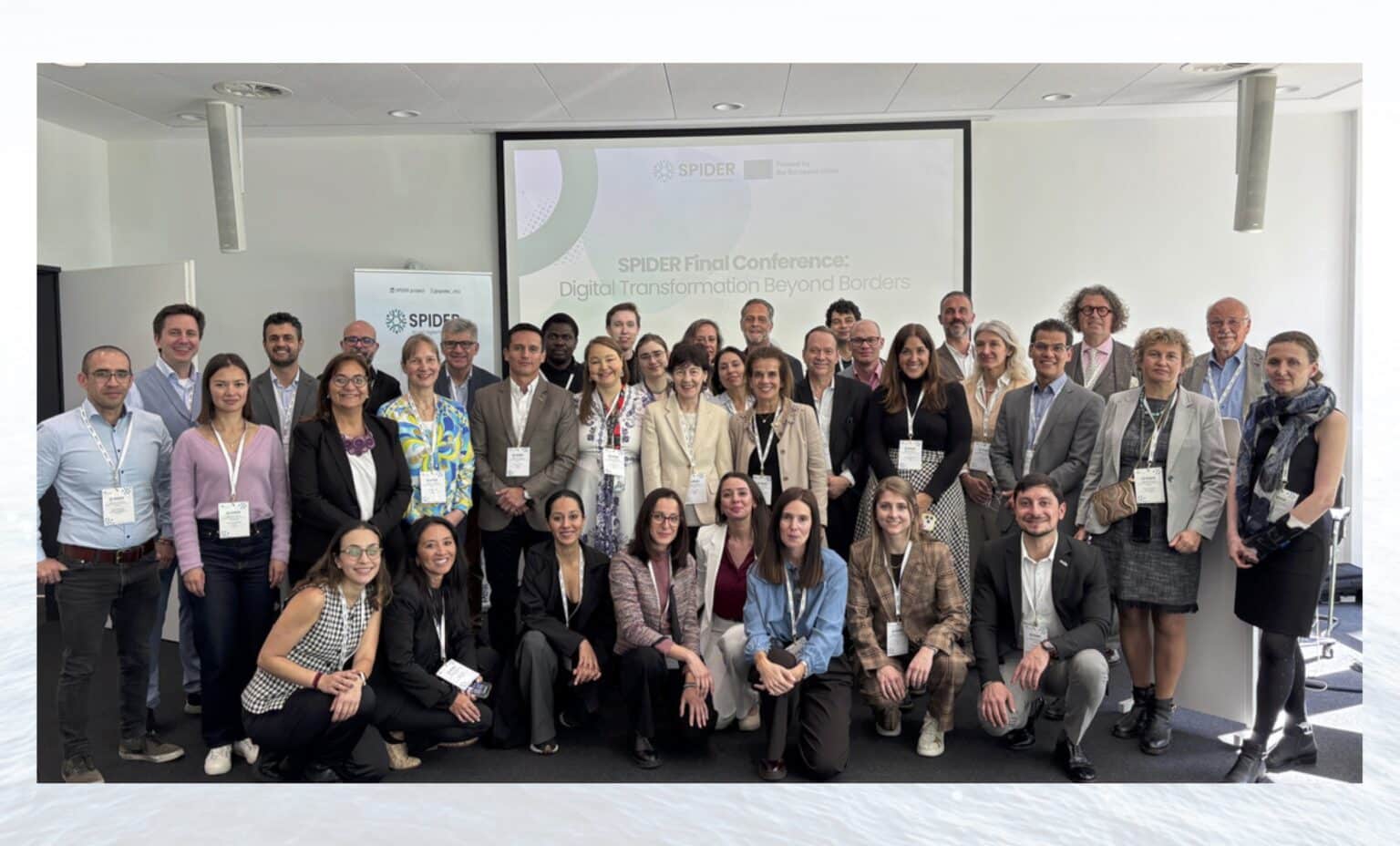
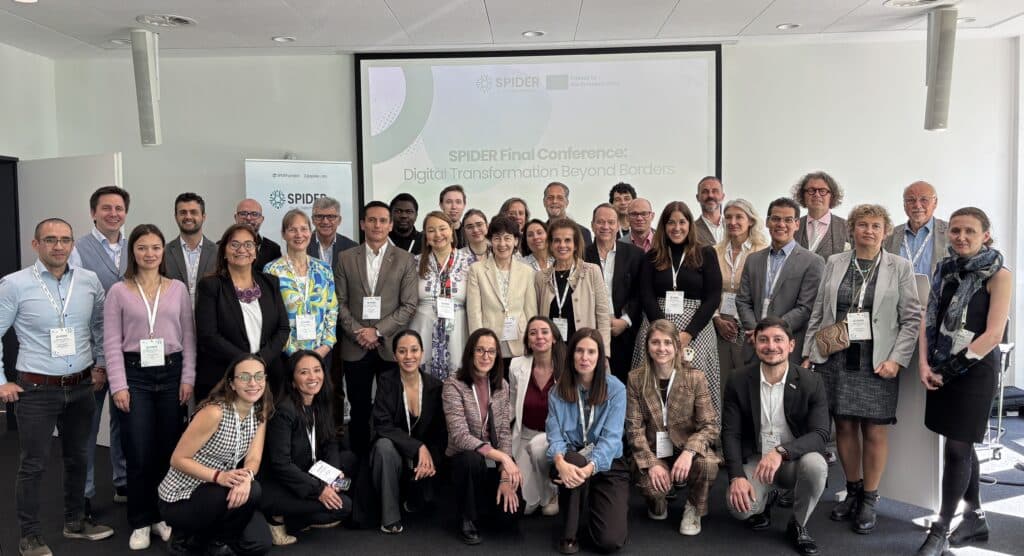
On 15 April 2026, the SPIDER Final Conference convened at DLR Projektträger in Bonn, Germany; bringing together policymakers, researchers, innovation leaders and network operators from Europe, Latin America and the Caribbean for a full day of structured dialogue. The previous evening, participants had gathered at the Deutsches Museum Bonn for a welcome reception: informal, cross-regional, and oriented around the kind of trust-building that formal agendas rarely capture.
The conference was the culmination of our 30-month, EU-funded project that brought together partners from Spain, Portugal, Germany, Belgium, Chile, Ecuador, Brazil, and Costa Rica. Its mandate: bridge the gap between the political commitments made in EU–LAC digital dialogues and what actually happens on the ground, with the BELLA network as a shared backbone and human-centred digital transformation as a guiding principle.
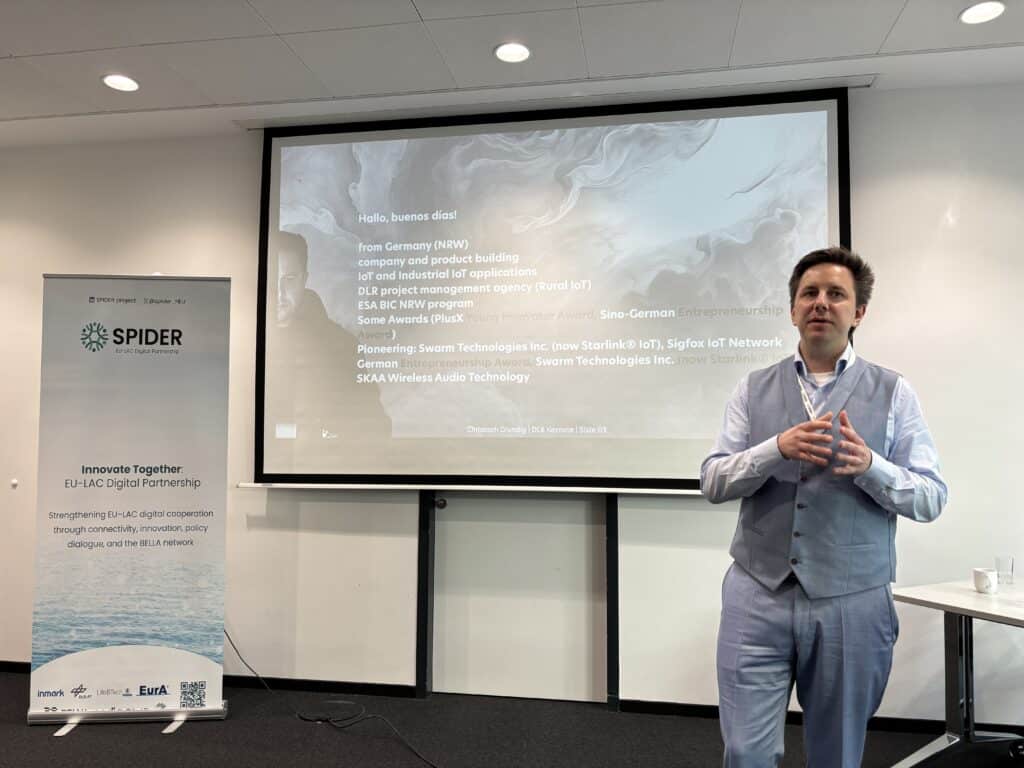
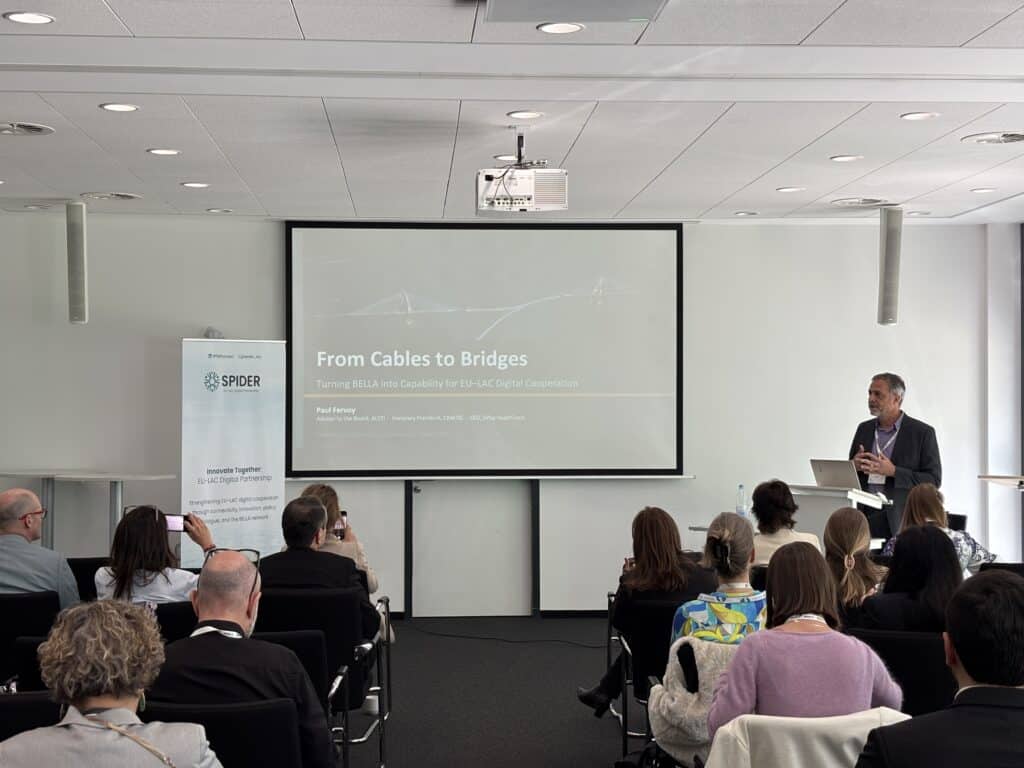
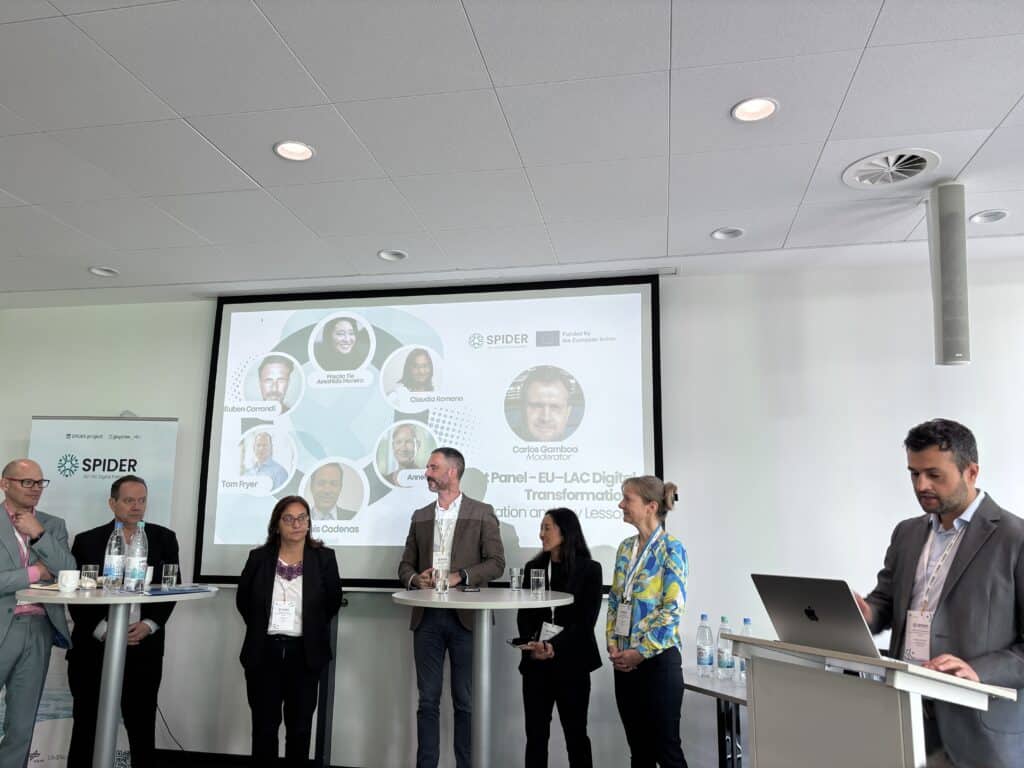
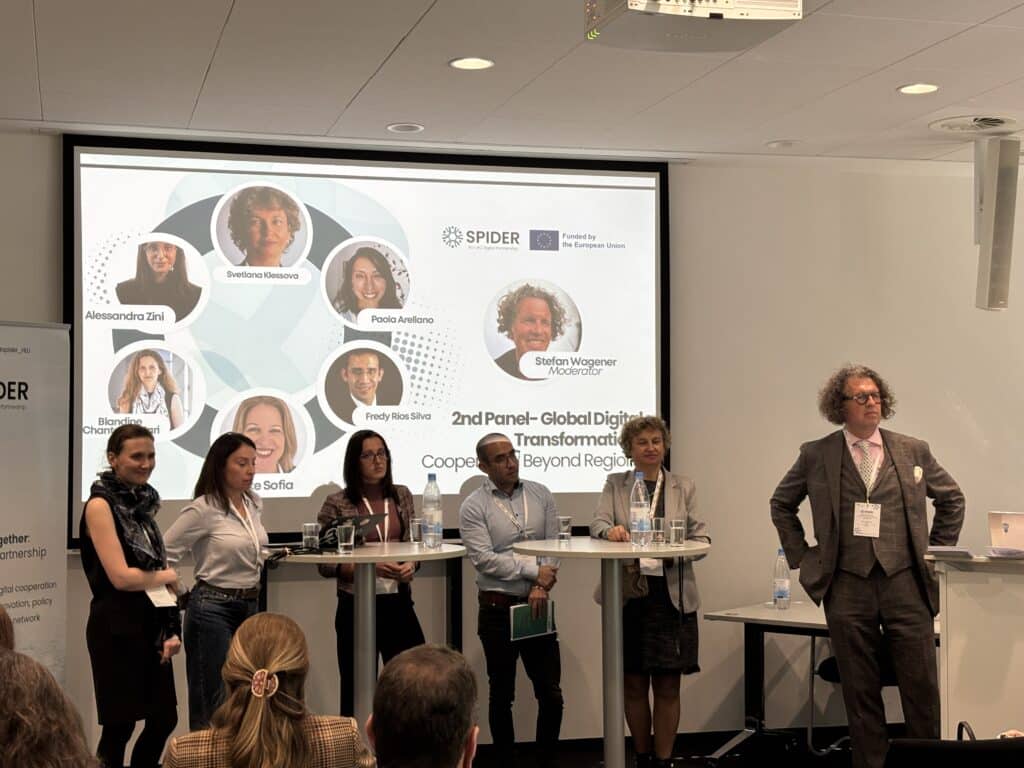
The day held two keynotes, Christoph Grundig on digital transformation beyond borders, and Paul Fervoy on the role of Latin America’s ICT industry in EU–LAC cooperation, and two panel sessions. The first examined EU–LAC digital cooperation directly: regional models, lessons learned, and priorities for sustaining the EU–LAC Digital Partnership and the BELLA Network. The second broadened the lens to global digital cooperation, with representatives from initiatives spanning the Indo-Pacific, Africa, and the transatlantic space. Between and around these anchors, SPIDER presented the concrete outputs of its work: the results of our mapping of EU–LAC digital dialogues and agreements along with the SpiderHub AI platform, the Digital Dialogues Implementation Forum, the Twinning Programme, a Roadmap for EU–LAC cooperation, and a Position Paper on the future of BELLA.
What follows are the key conclusions that emerged from the discussions held.
Key conclusions from the conference
1. Trust is the foundation, and it takes years to build
Across every session, trust emerged as the single most critical factor for successful international cooperation. Not connectivity. Not funding. Not policy frameworks. Trust; between institutions, between regions, and between people.
The implication is uncomfortable but important: cooperation programs designed around short funding cycles actively undermine the very thing they are trying to build. Sustained engagement yields results; short programs risk dismantling trust just as it begins to form.
“Trust takes years, not months, to build. Program frameworks must be designed accordingly.”
2. The gap between strategy and operations is structural
There is no shortage of political dialogue, strategic frameworks, or bilateral agreements on digital cooperation between Europe and Latin America and the Caribbean. What is persistently missing are the operational instruments that allow companies, innovation hubs, and research institutions to actually work together.
Regulatory complexity, particularly around EU rules on intellectual property and compliance, adds significant friction, especially for startups trying to operate across regions. Bridging this gap requires more than political will. It requires governance structures and implementation pathways designed to survive political cycles.
3. Infrastructure is necessary but not sufficient
Physical connectivity between Europe and Latin America and the Caribbean is, for the most part, in place. The BELLA network, including the EllaLink submarine cable, provides high-capacity, resilient infrastructure for the decade ahead.
The real challenge lies elsewhere: in national networks, in institutional connectivity, and in ensuring that every university and research institution is connected and funded to participate. The digital divide persists until that last-mile problem is solved. Infrastructure does not cooperate by itself. Institutions do.
4. Ecosystem maturity is uneven, and frameworks must account for it
Significant variation exists in the maturity of innovation ecosystems across both regions; in terms of innovation capacity, internationalization ability, and institutional readiness. Cooperation frameworks that treat all actors as equivalent will reproduce existing asymmetries.
More mature ecosystems need mechanisms to support less mature ones without creating dependency. This is a design challenge, not just a funding question.
5. The pace of change is outrunning workforce readiness
Rapid technological change, particularly AI, is creating labour market disruption at a scale that existing reskilling infrastructure cannot match. This is acute globally, but especially in regions where skills gaps are already measurable.
Workforce adaptation consistently lags behind the speed of change. Technology adoption must be framed around citizens and workers, not just efficiency or competitiveness, if it is to be sustainable and equitable.
6. Emerging regions are navigating competing geopolitical models
Latin America and similar regions are operating in a complex digital geopolitical landscape. Competing models from the US, China, and Europe all vie for influence, and the terms of digital collaboration are still being defined.
One consequence of this was discussed openly at the conference: regions with lighter regulatory environments are adopting technology faster, which is a key reason some emerging regions find collaboration with certain partners operationally easier than with Europe, despite the trade-offs involved. This tension needs to be addressed honestly in how European partnership frameworks are designed.
7. Standardization remains an unresolved gap
There are currently no fully shared protocols, standards or technologies enabling seamless cross-regional digital collaboration. Standardization work is underway in some initiatives, but the gap remains. Without it, interoperability is limited and equitable global partnerships are harder to build.
What SPIDER built
SPIDER spent thirty months working to close specific gaps in the EU–LAC digital cooperation landscape. Five outputs worth highlighting:
The EU–LAC Digital Dialogues Implementation Forum (DIF): A structured, operational space for policy debate and knowledge exchange that did not exist before SPIDER. It now brings together more than seventy experts from both regions, with dedicated working groups on cybersecurity, human-centred digital transformation, and diversity, equity and inclusion.
The mapping of EU–LAC digital dialogues and agreements: A structured inventory of more than 150 EU–LAC digital dialogues, bilateral agreements, and cooperation frameworks, the most comprehensive overview of this landscape ever produced. This mapping work inspired the development of the SpiderHub: an AI-supported platform that makes this knowledge base accessible and searchable to any actor working in this space today.
The Twinning Programme: Five operational partnerships between EU and LAC innovation hubs, MoUs signed, joint action plans developed, and go-to-market strategies built.
The Roadmap for EU–LAC Cooperation on Digital Transformation: An operational document translating two years of evidence, dialogue and stakeholder input into concrete guidance for what comes next.
Position Paper on Pathways for the Exploitation of the BELLA Infrastructure: A clear strategic case for repositioning the BELLA network from a connectivity asset into a driver of EU–LAC R&I cooperation, with specific recommendations for how institutions and funders can make that shift.
A Community of Practice: A cross-regional community of practitioners, researchers and institutional actors engaged in EU–LAC digital cooperation, built through the project and continuing beyond it.
What the conference made clear
“Dialogue generates commitment. Structures are what make that commitment operational.”
The most important insight from the day is also the most straightforward: digital transformation beyond borders requires more than infrastructure, more than political will, and more than good intentions. It requires operational structures that make cooperation durable, structures that can carry partnerships through political cycles, funding gaps and institutional change.
SPIDER has worked to build those structures. The DIF is a living forum. The SpiderHub is a live tool. The Roadmap will set a pathway. The Twinning partnerships are real relationships between real organisations. And BELLA now has a clearer strategic case for what it can become.
The question is no longer whether EU–LAC digital cooperation is desirable. It is whether the institutions, frameworks, and funding mechanisms exist to make it durable. That is the work that continues.